Refuge in the Landscape
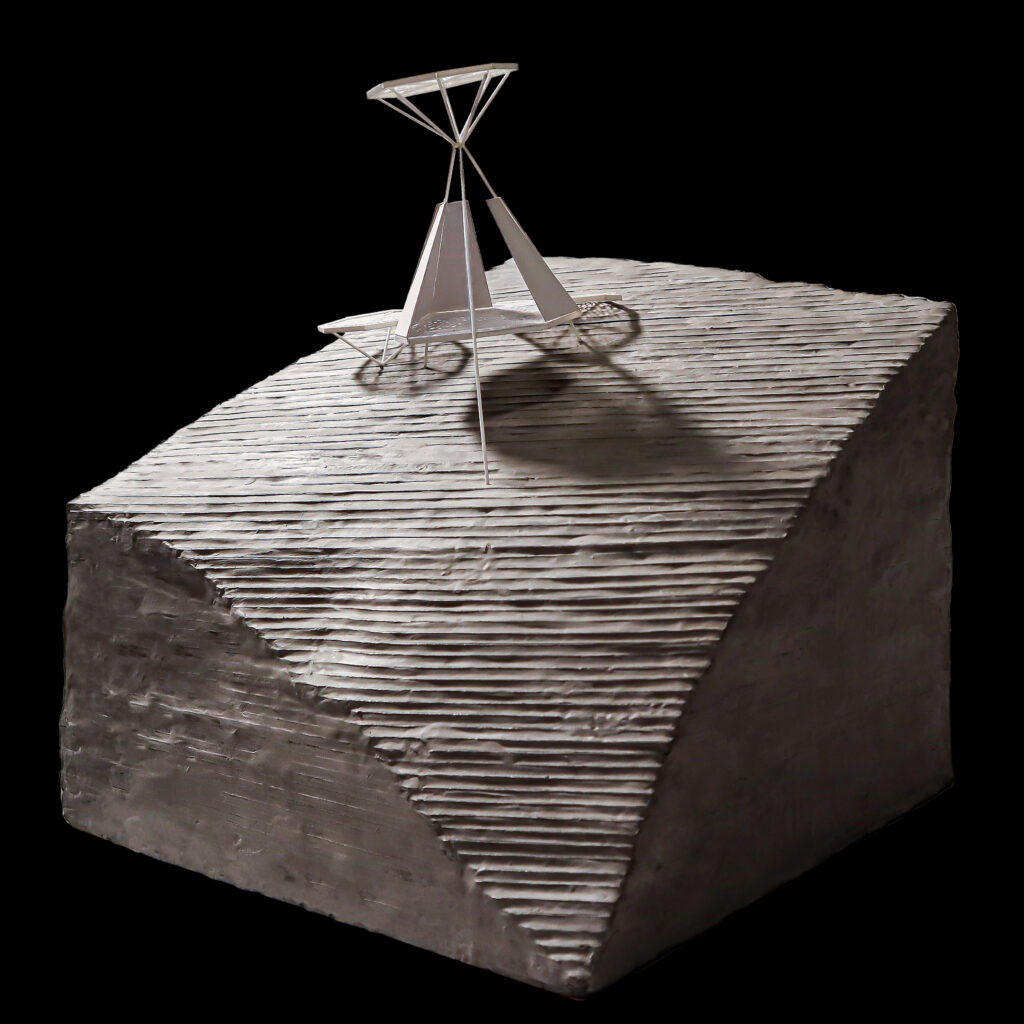
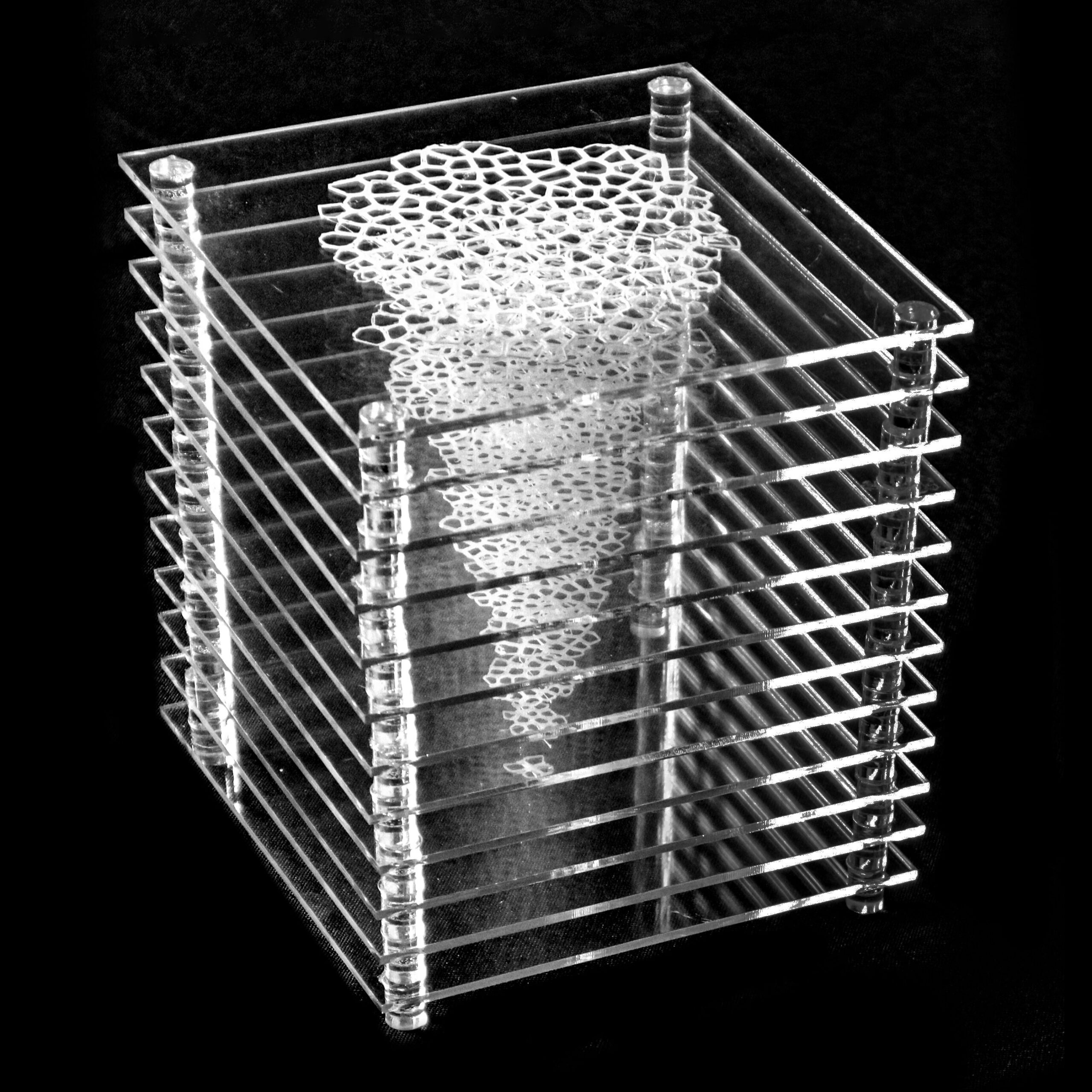
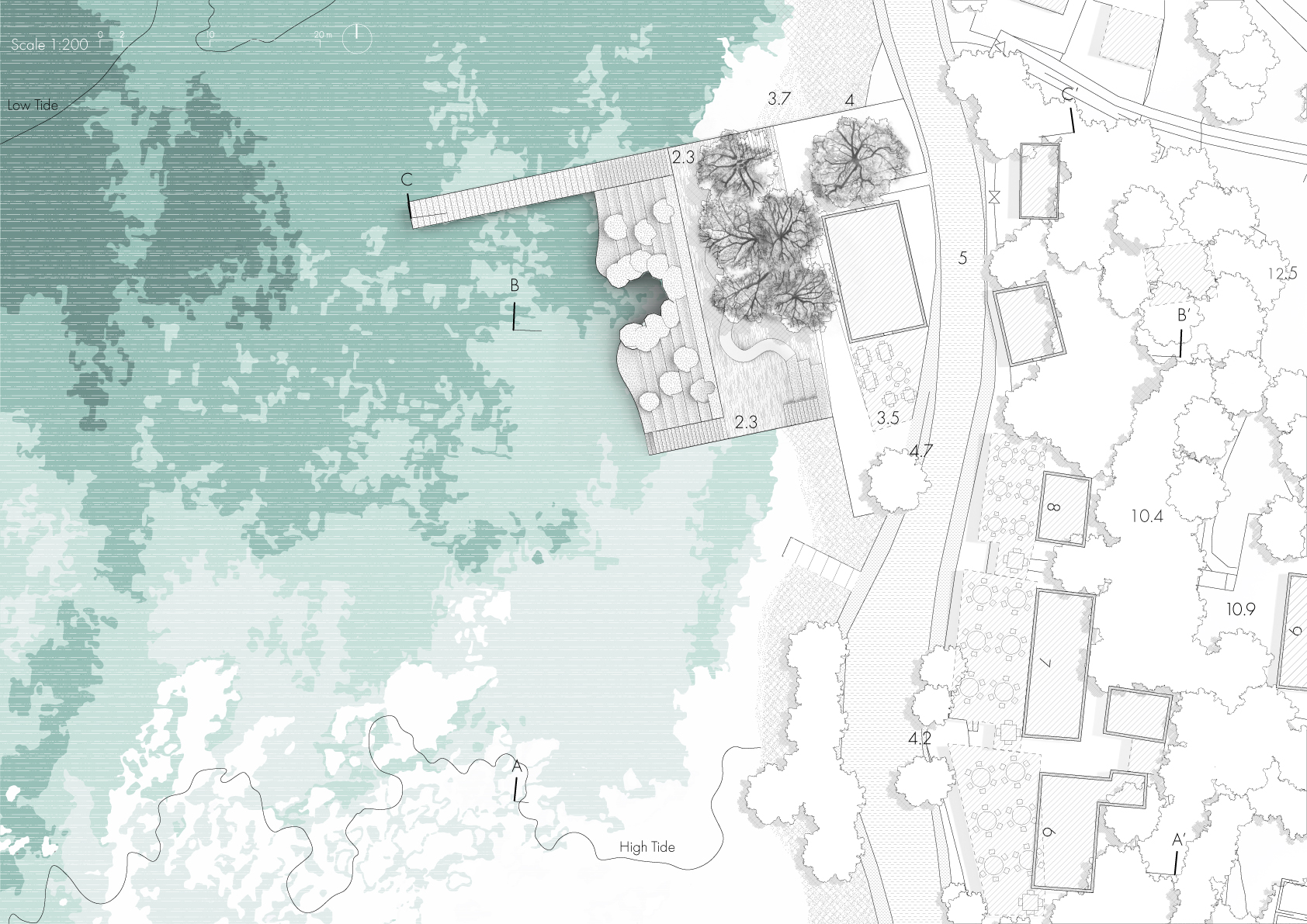
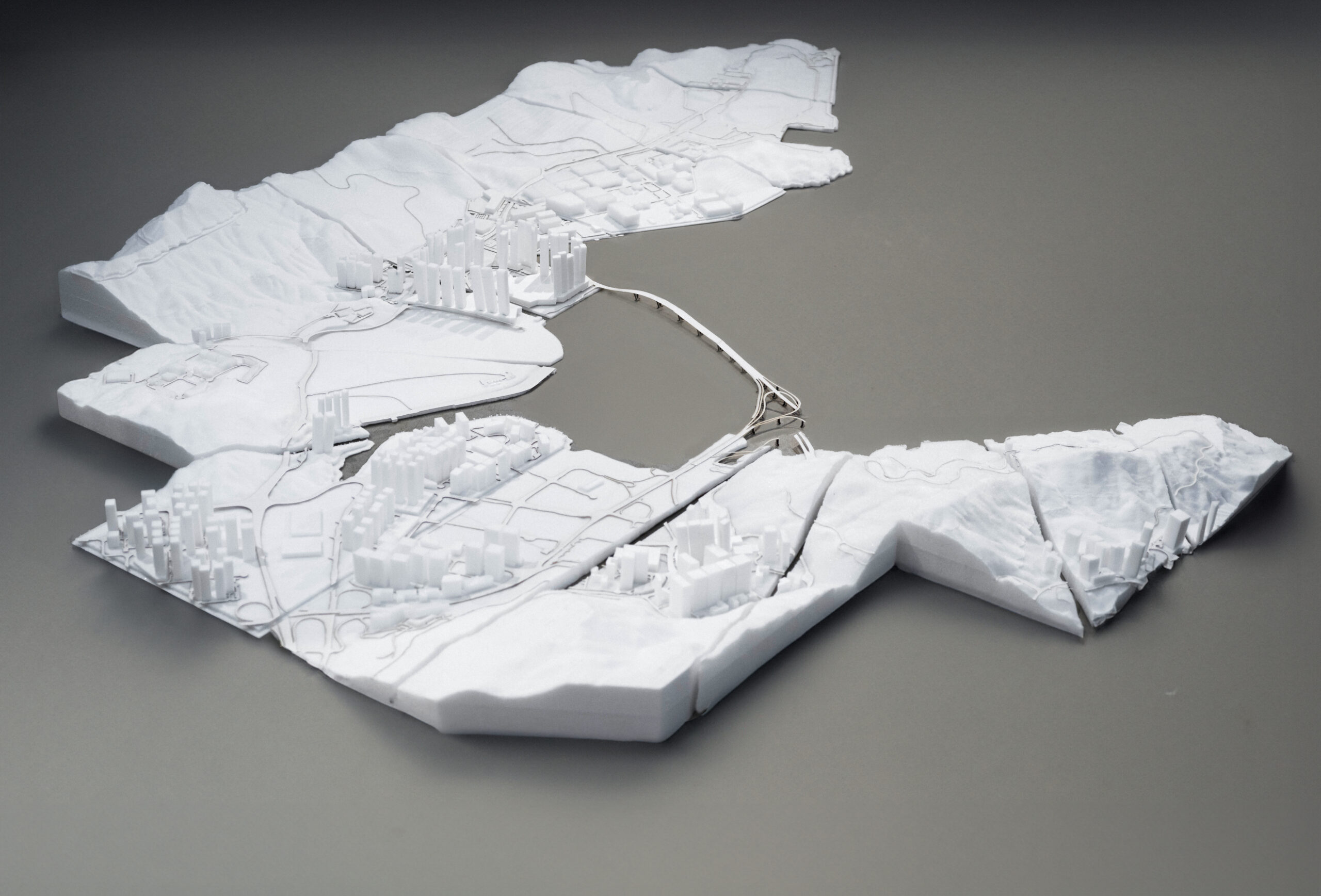
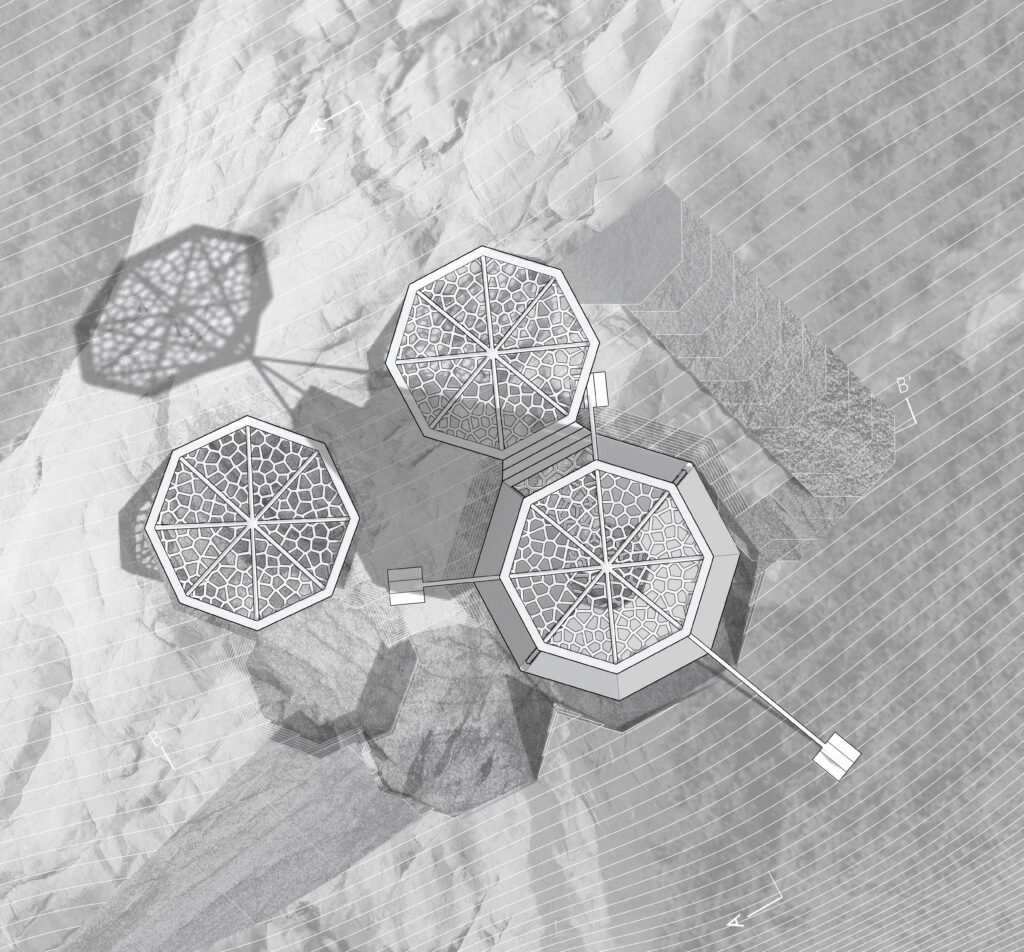
Landscapes are not static, but dynamic. This studio recognizes landscape tectonics, which refers to the underlying forces, movements, and processes that shape the forms, patterns, and structures of landscapes over time. Set on Po Toi Island, a rugged hiking destination in Hong Kong known for its unique geological formations and rock outcrops, the project designs a small refuge that serves as a rest stop for hikers, integrated sensitively into the site’s natural context. Geological phenomena like erosion and weathering are conceptualized using a single verb to describe the core action, then supplemented with two additional compatible verbs: “expand,” for the downward and lateral expansion of lichens—a life form colonizing the rock surfaces on Po Toi—as part of biological weathering; and “arrange,” for the orderly arrangement of molecules in rock minerals. This iterative approach helps translate abstract inspirations into tangible spatial configurations. The design of the refuge is not random; rather, it draws ideas about form, scale, and proportions from a detailed rock study of Po Toi. The form of the refuge derives from the interpretation of underlying forces—internal (such as mineral compositions) and external (like biological interactions)—that shape our physical landscape. This interpretation process extends beyond what the naked eye can see, revealing unseen structures: quartz, a key mineral in Po Toi granite, features an orderly arrangement of tetrahedrons, while the lower cortex of lichen is largely hollow and porous. These understandings of forces and mineral compositions are manifested in the refuge as a distinct octagonal pyramid paved with porous cellular-patterned steel, evoking the crystalline order of quartz and the hollow, disintegrative qualities of lichen. The carved negative spaces below the structure extend the octagonal pyramidal form, creating spatial hierarchies that respond to the site’s ephemeral qualities, such as sunlight, wind, and rain.
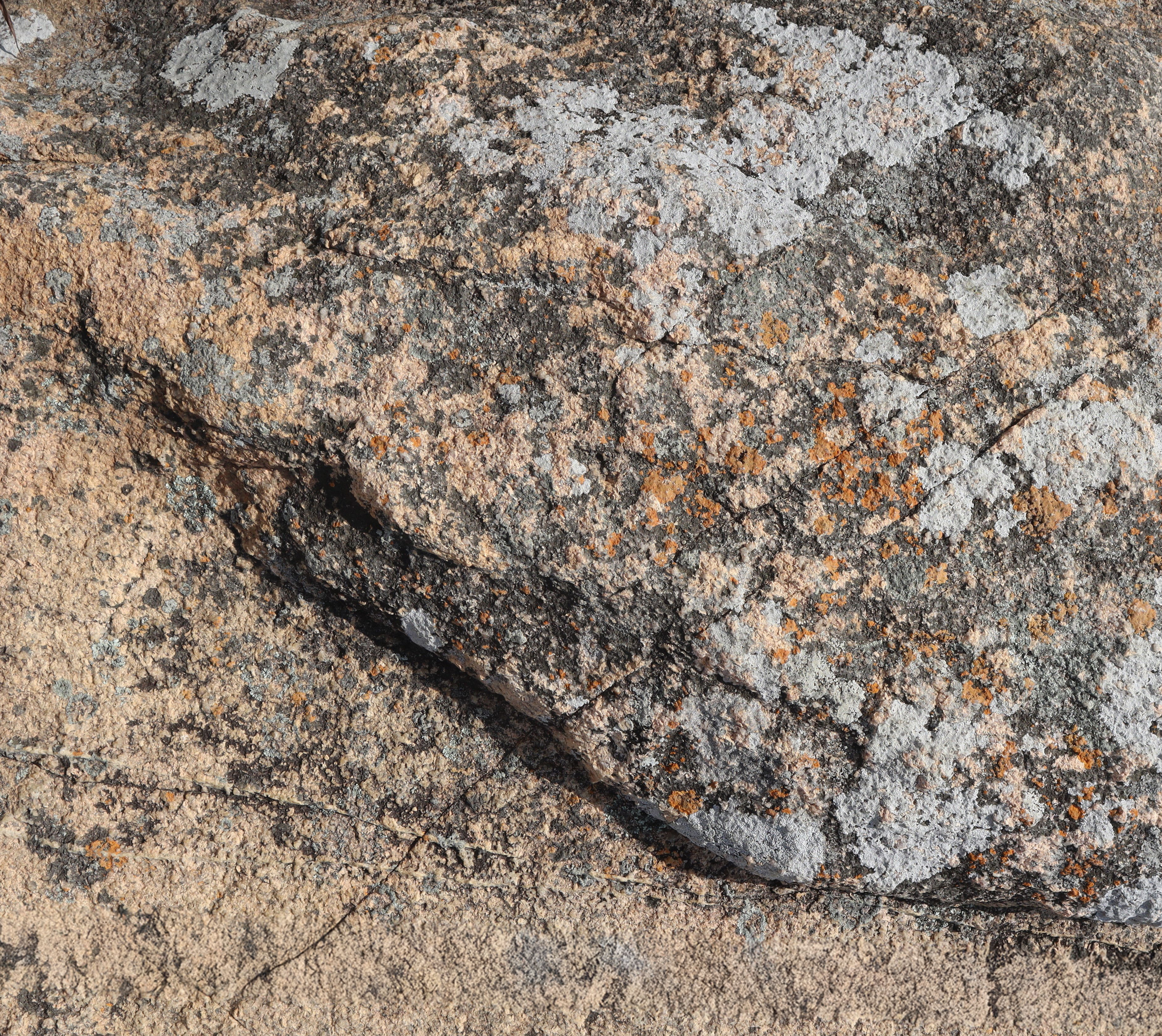
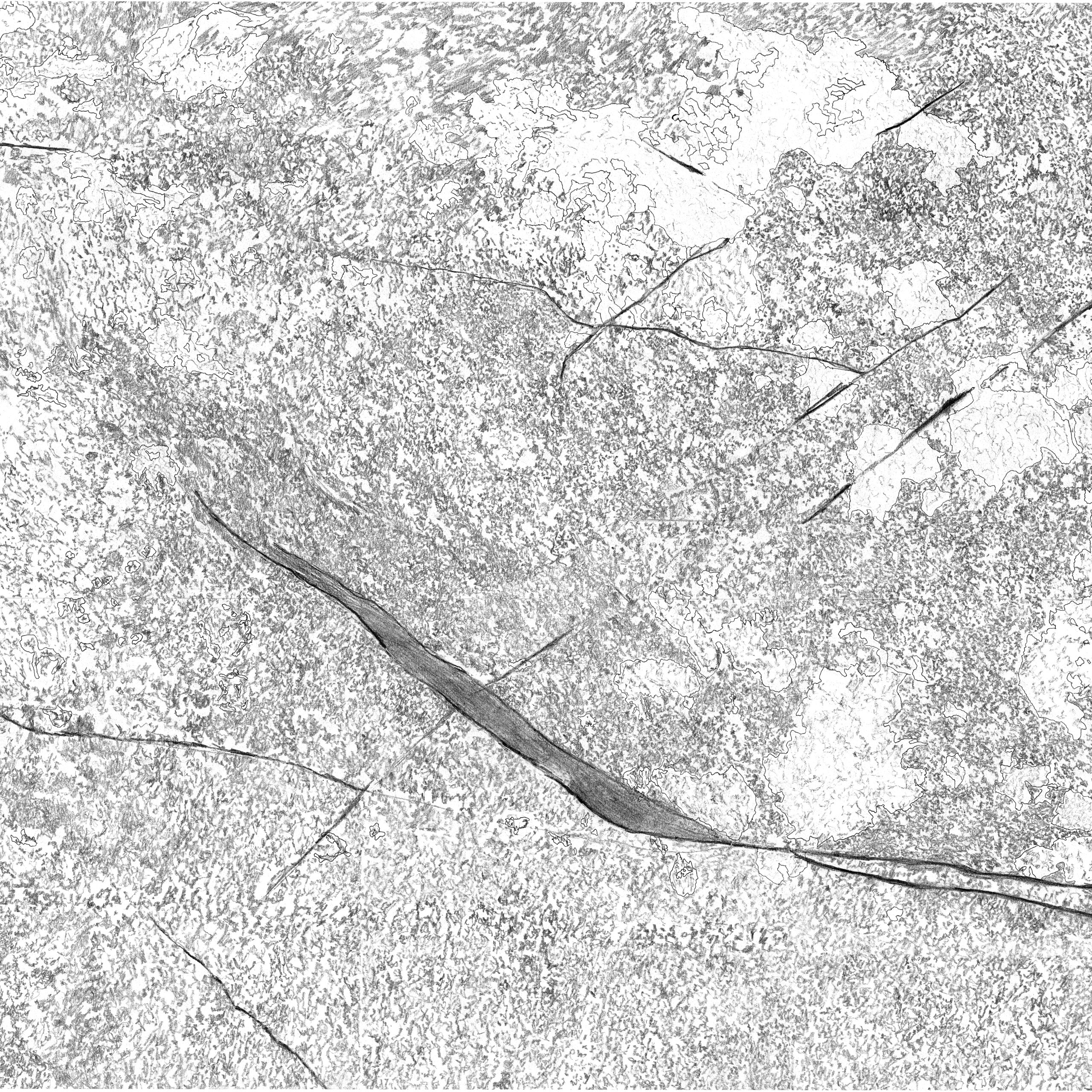
Hand-drawn 80 x 80 cm Selected Rock Area
Division of Landscape Architecture Annual 2022 – 23)