Project Context Northwest Lantau features a rich but vulnerable cultural landscape, including historic villages such as Sham Shek, and the Luk Wu Keung Shan monastic cluster, along with traditional agriculture, water management systems, and coastal-mountain ecology. Decades of emigration, infrastructure development, former mining activities, and environmental pressures have resulted in abandoned farmlands, declining communities, and threats to heritage structures and biodiversity. The project addresses these challenges through systematic documentation, community engagement, and forward-looking conservation strategies.
Scope The project encompasses documentation of village distribution, agricultural transformations, hydrology, ecology, key historic buildings, and landscape features. In addition, the project features site-specific public art installations that reinterpret local materials, traditions, and everyday needs while enhancing visitor experience and community use.
Objectives The project aims to document and raise awareness of the Tung O Trail’s layered cultural-ecological heritage, develop sensitive conservation strategies that balance preservation with adaptive reuse and sustainable community revitalization, foster public engagement through exhibitions and on-site art installations that bridge past and present, and strengthen connections between villages, monasteries, trails, and natural systems for long-term cultural and ecological resilience.
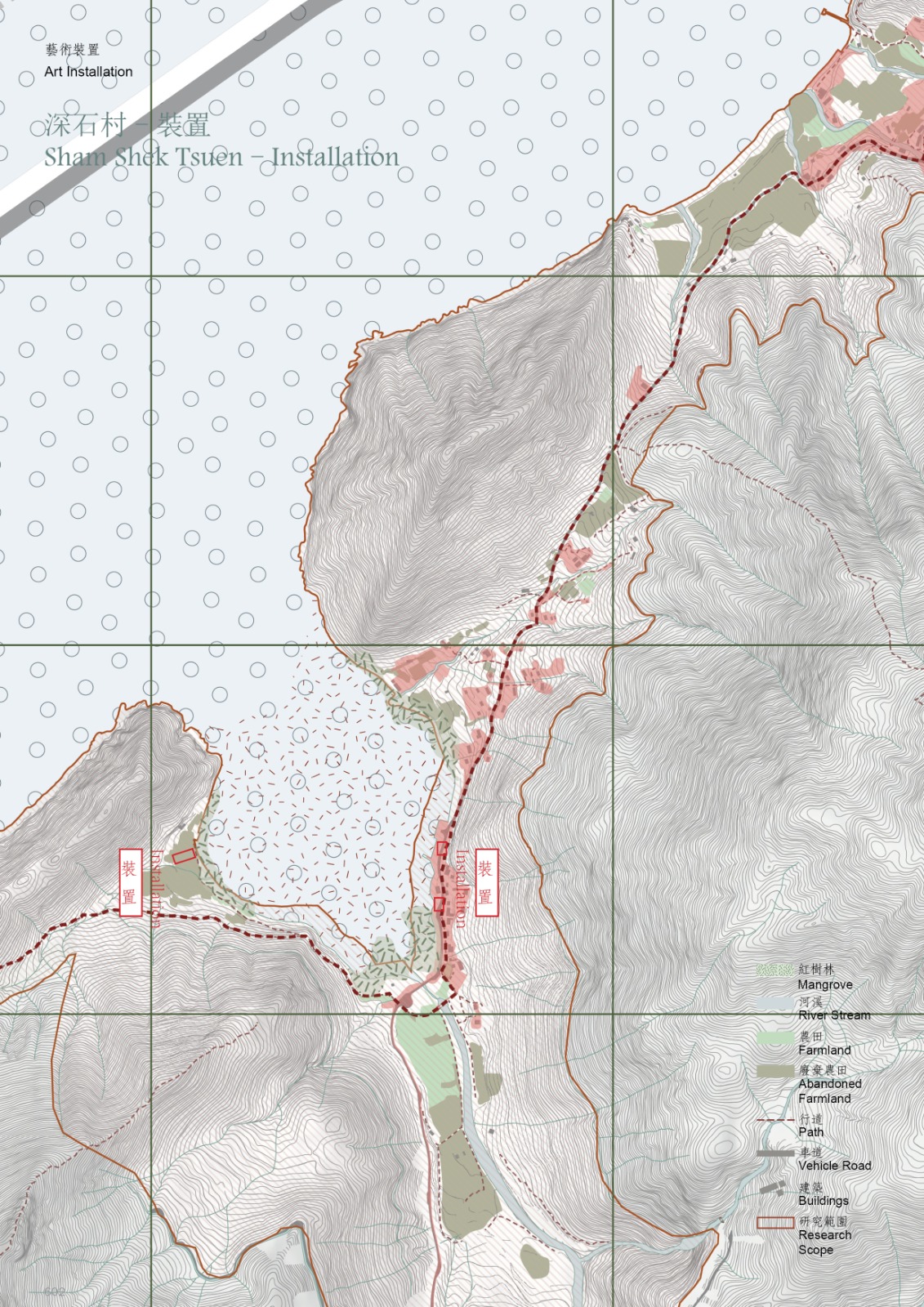
Art Installations (Sham Wat Area)
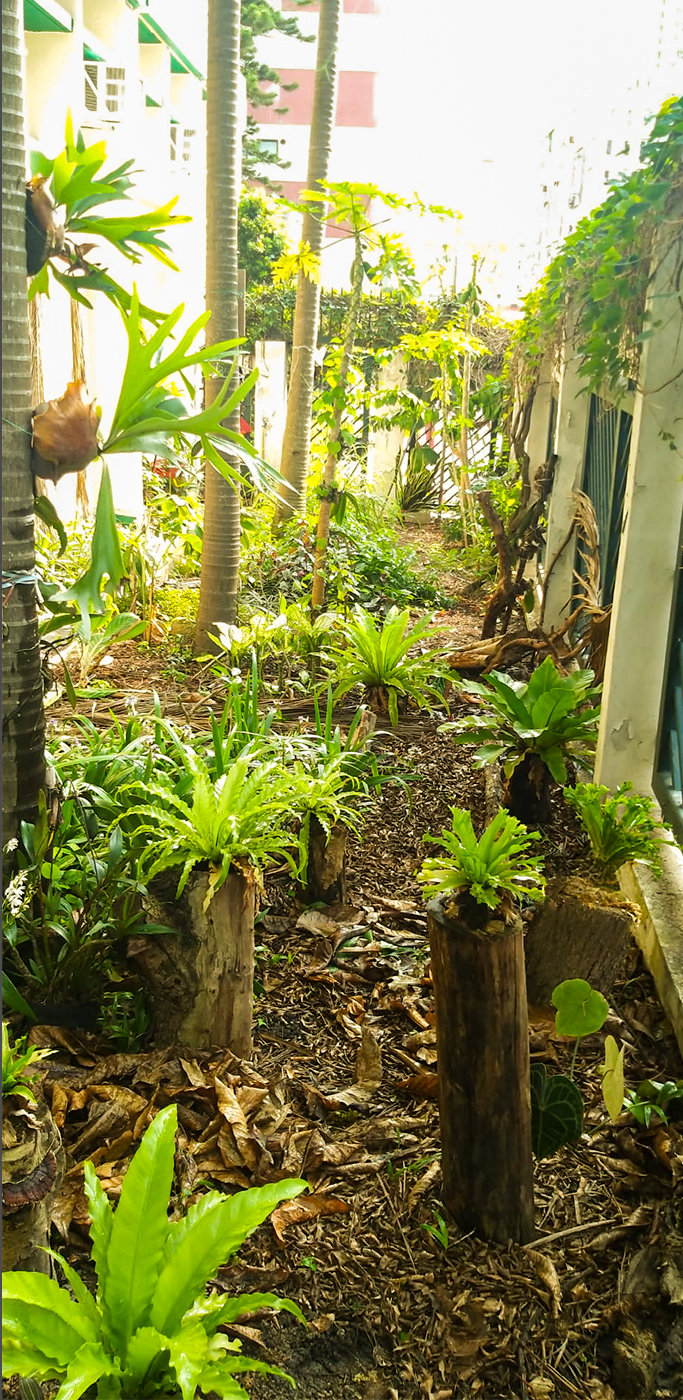
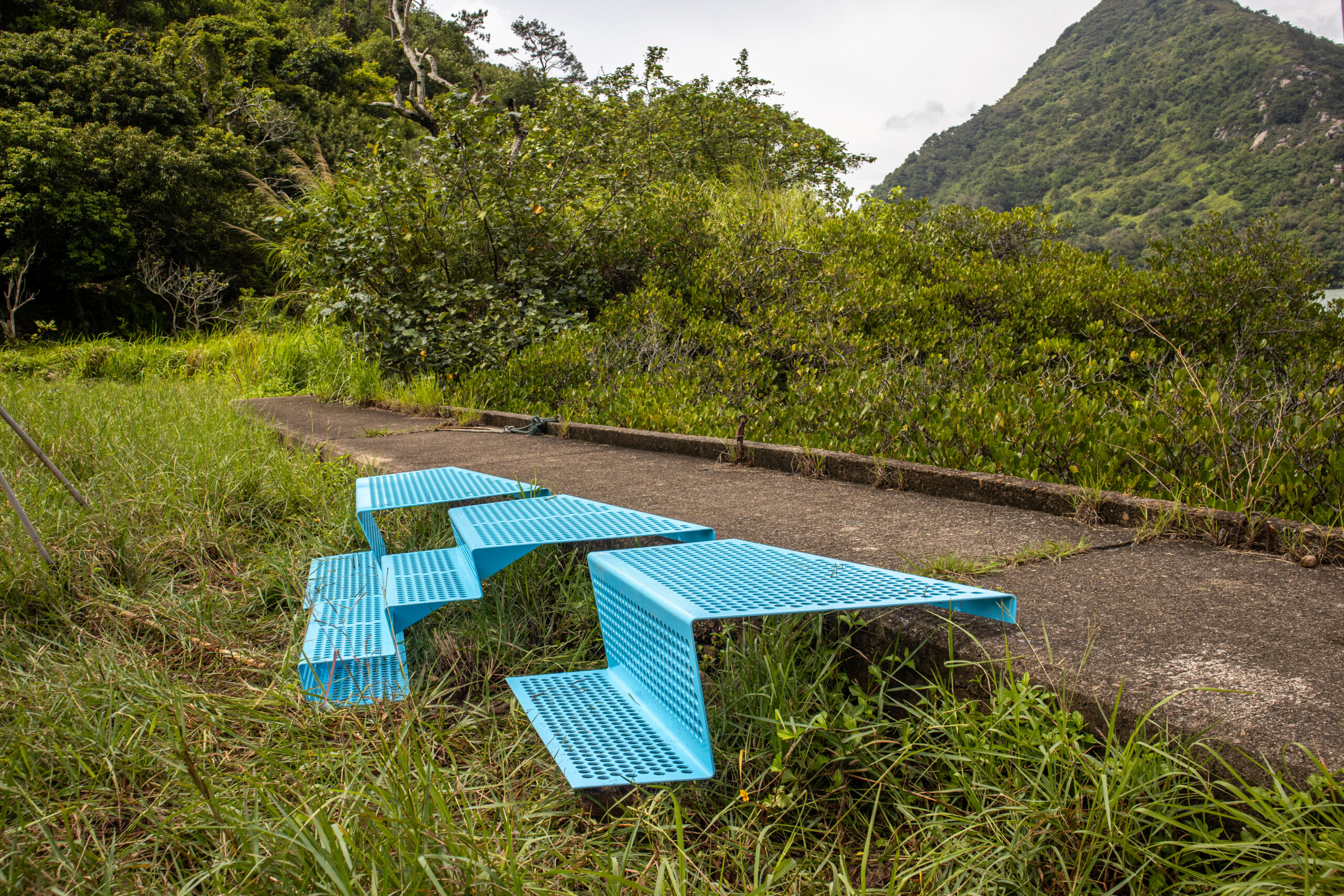
Field/Traces: A garden installation recalling the pre-1960s landslide-destroyed Sai Tso Wan settlement. Bamboo poles trace former agricultural terraces (now a wetland), serving as bird perches and visual signals across the bay, with blue metal steps connecting to the other works.
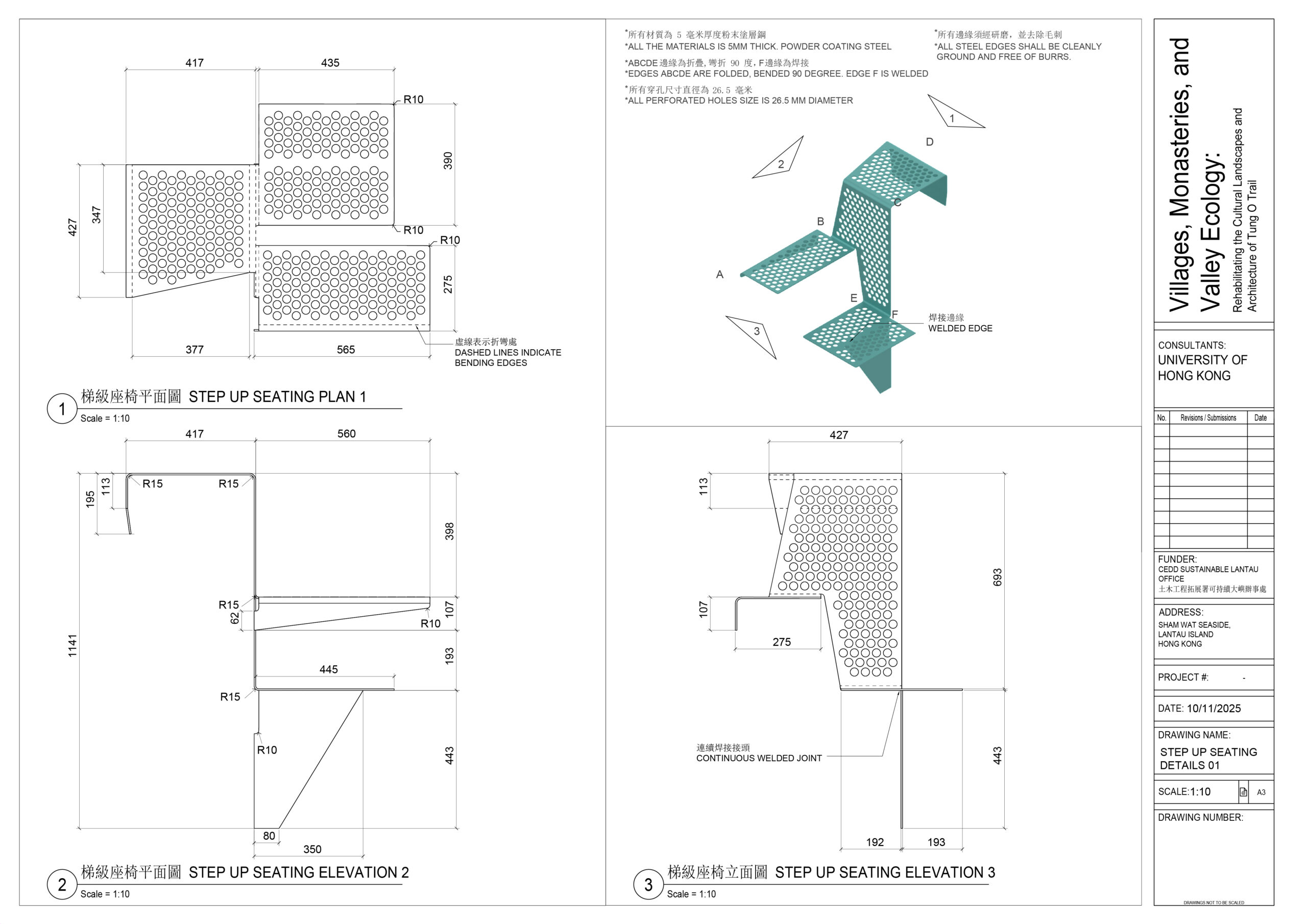
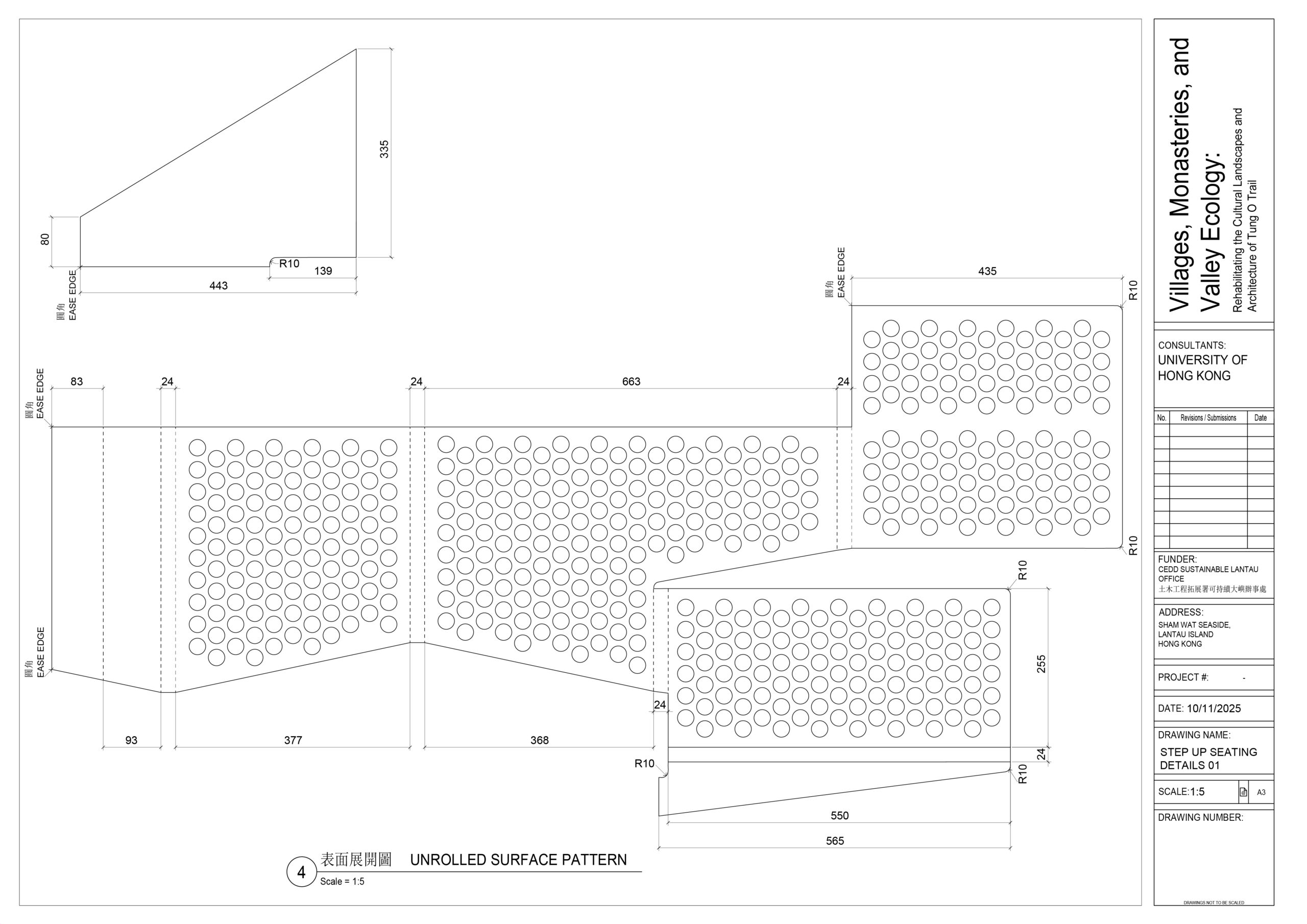
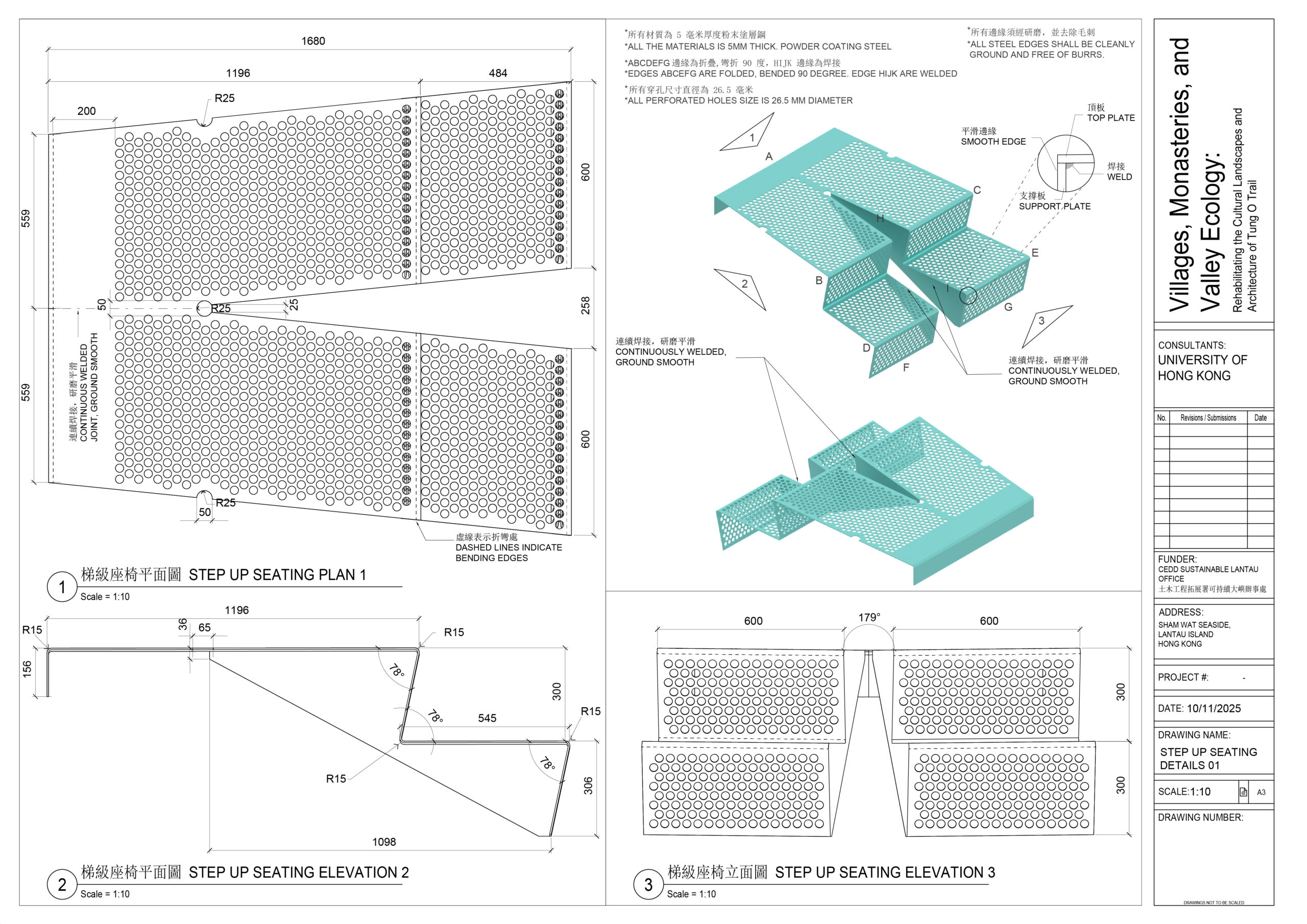
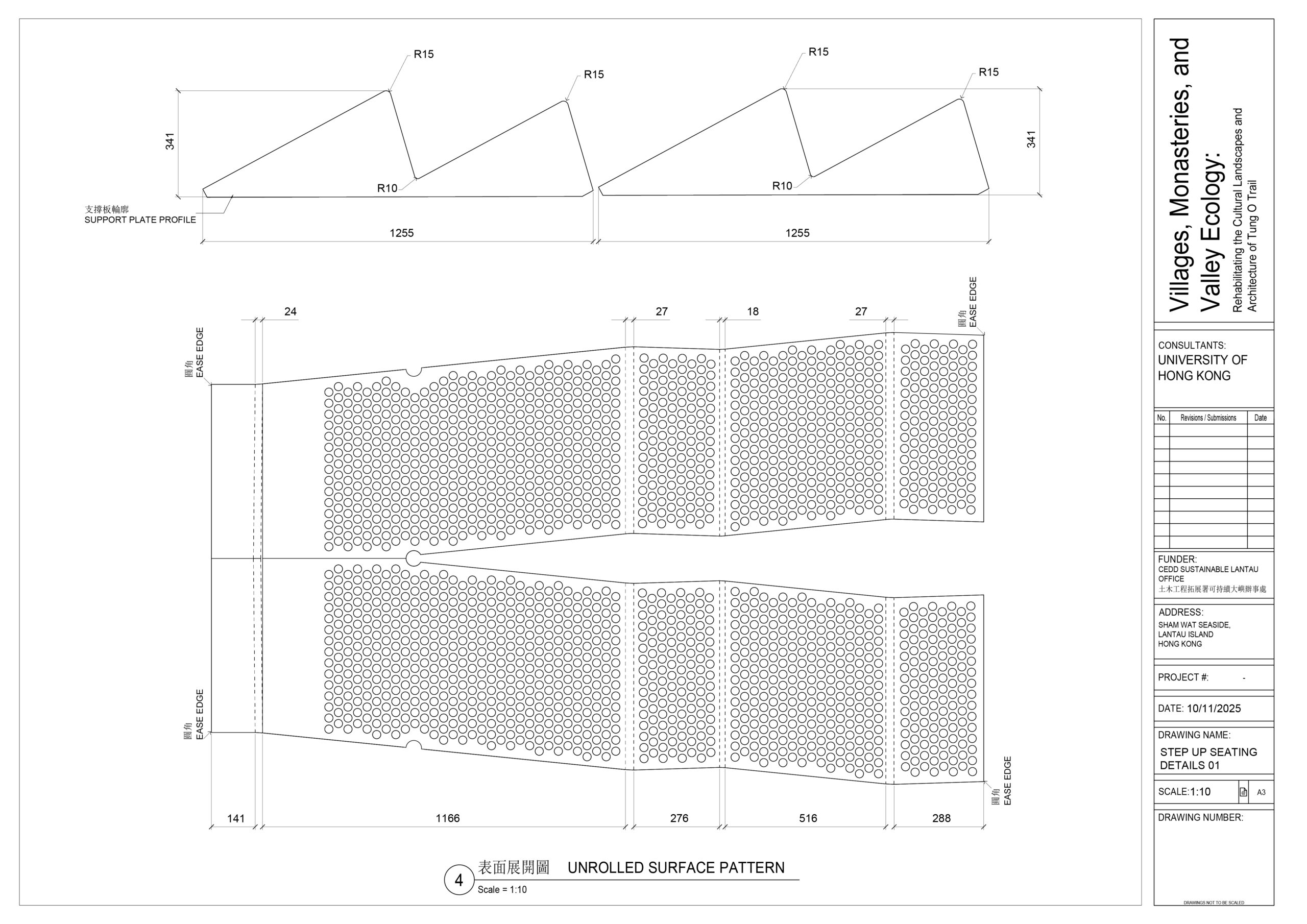
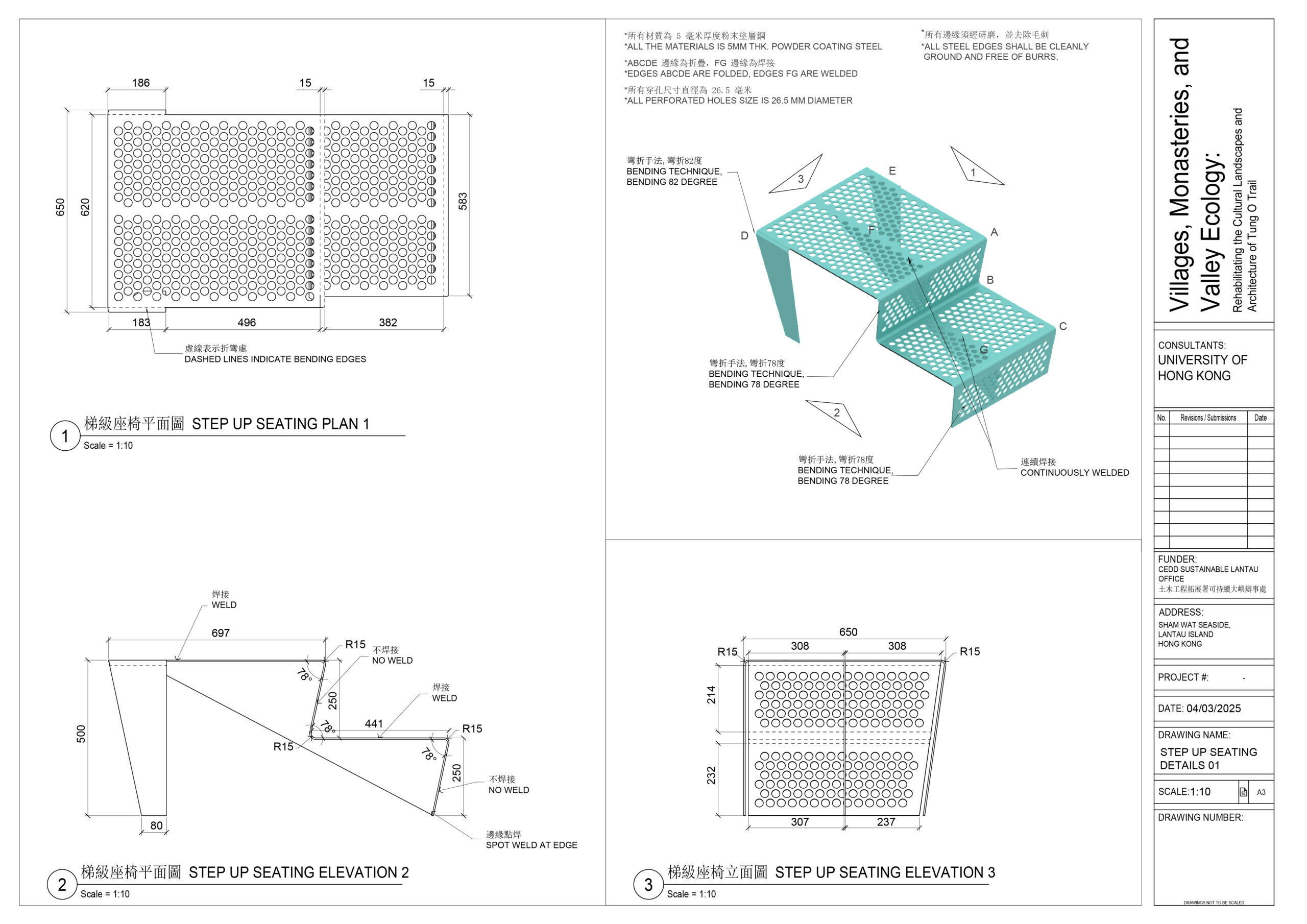
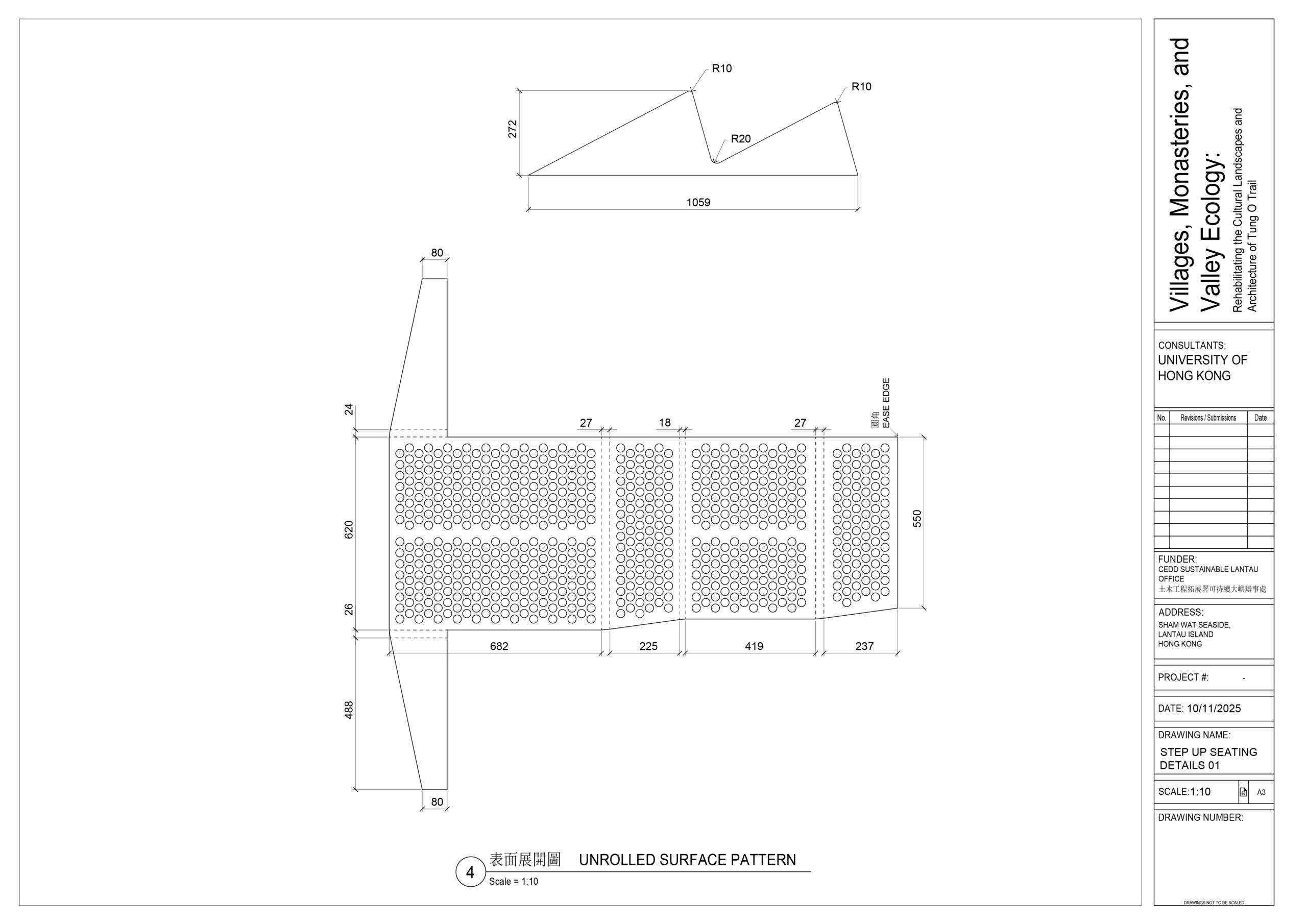
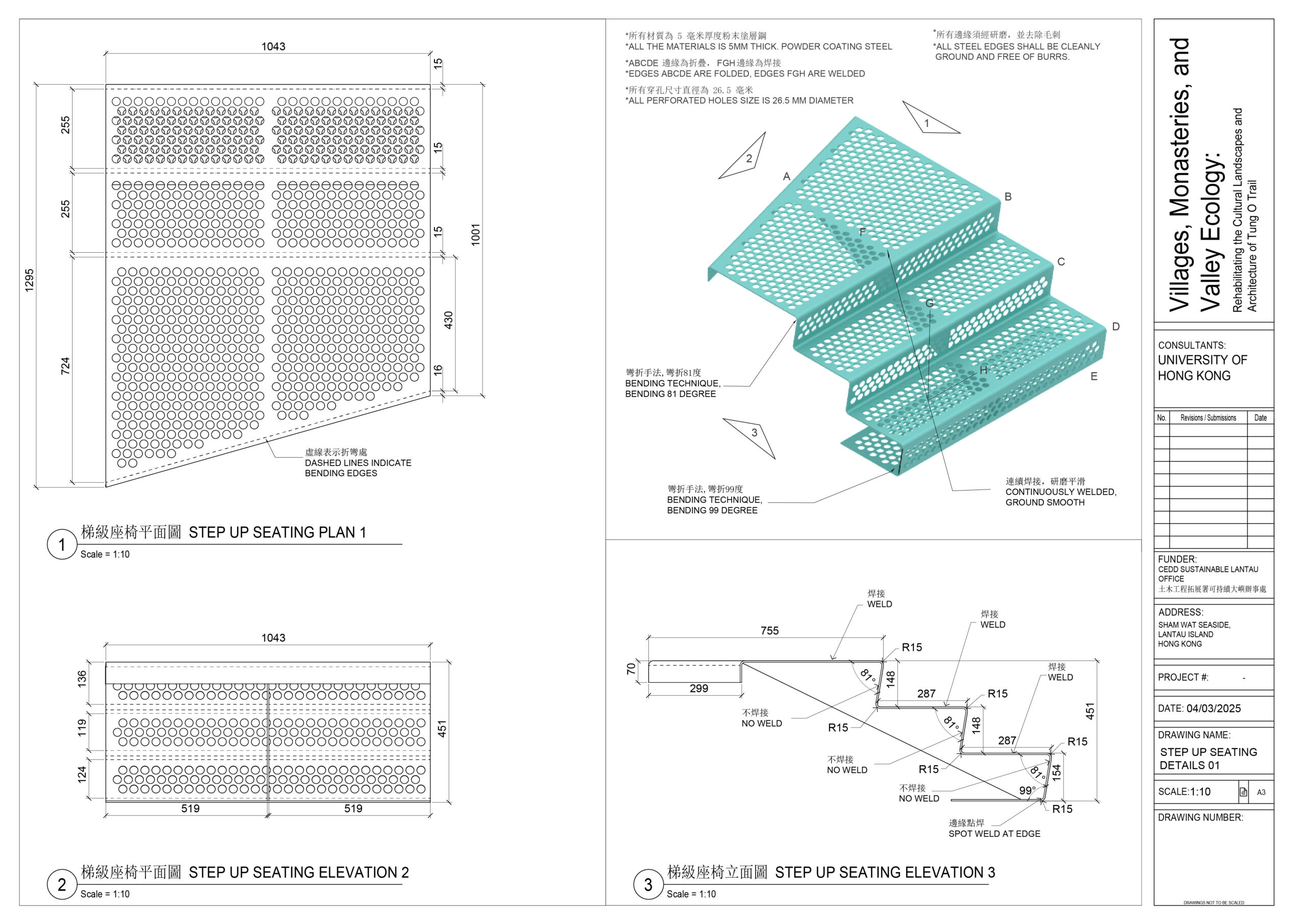
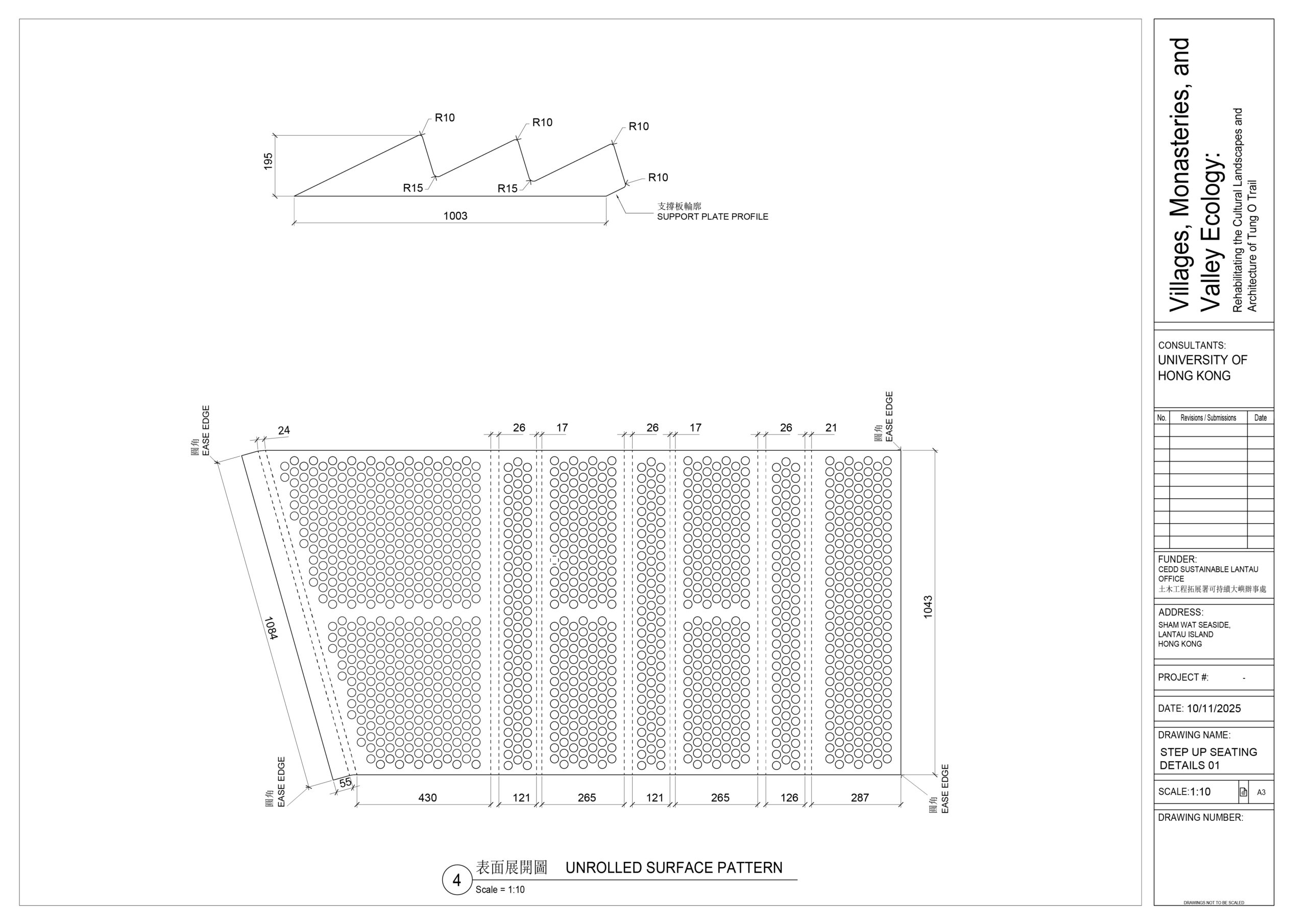
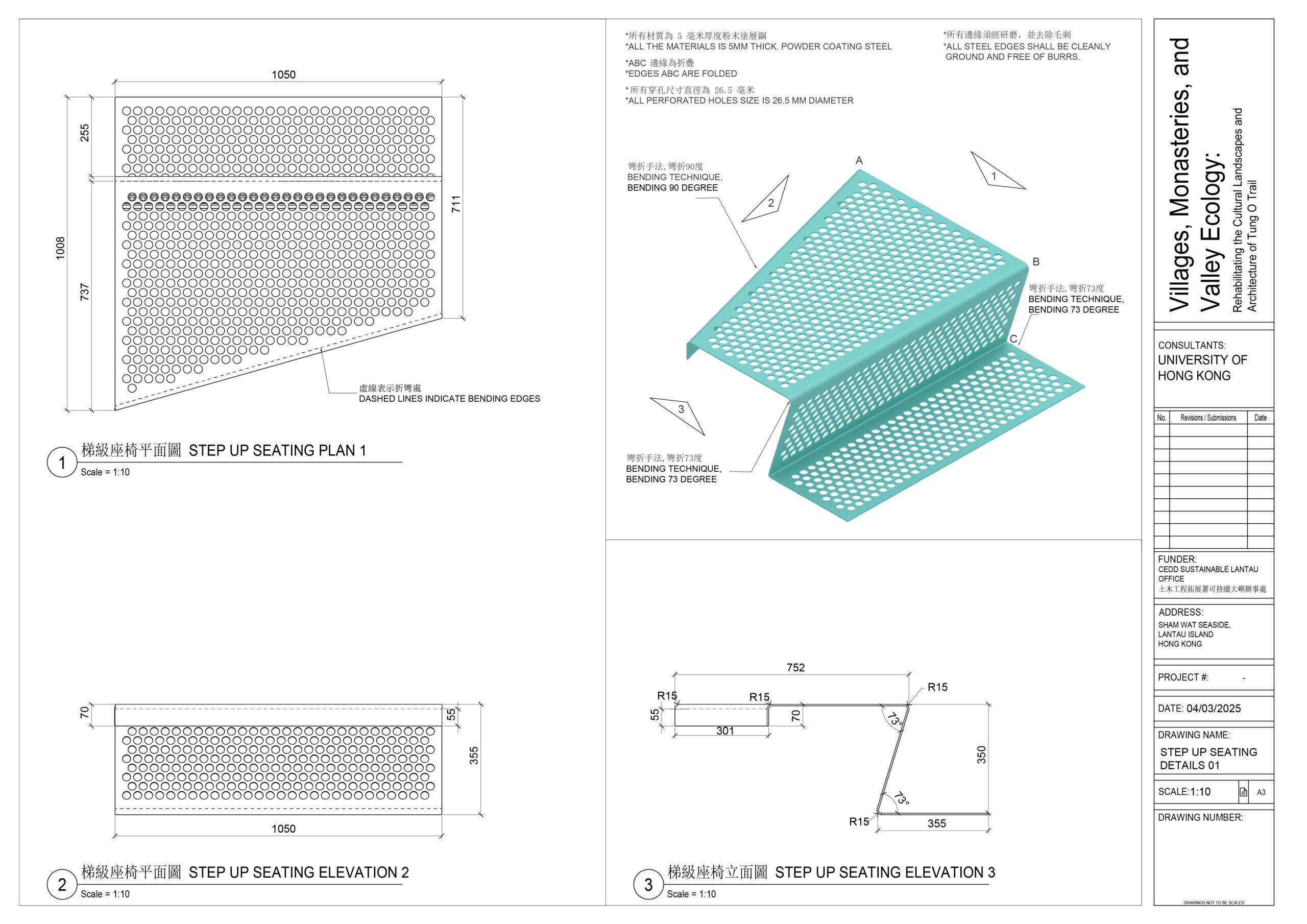
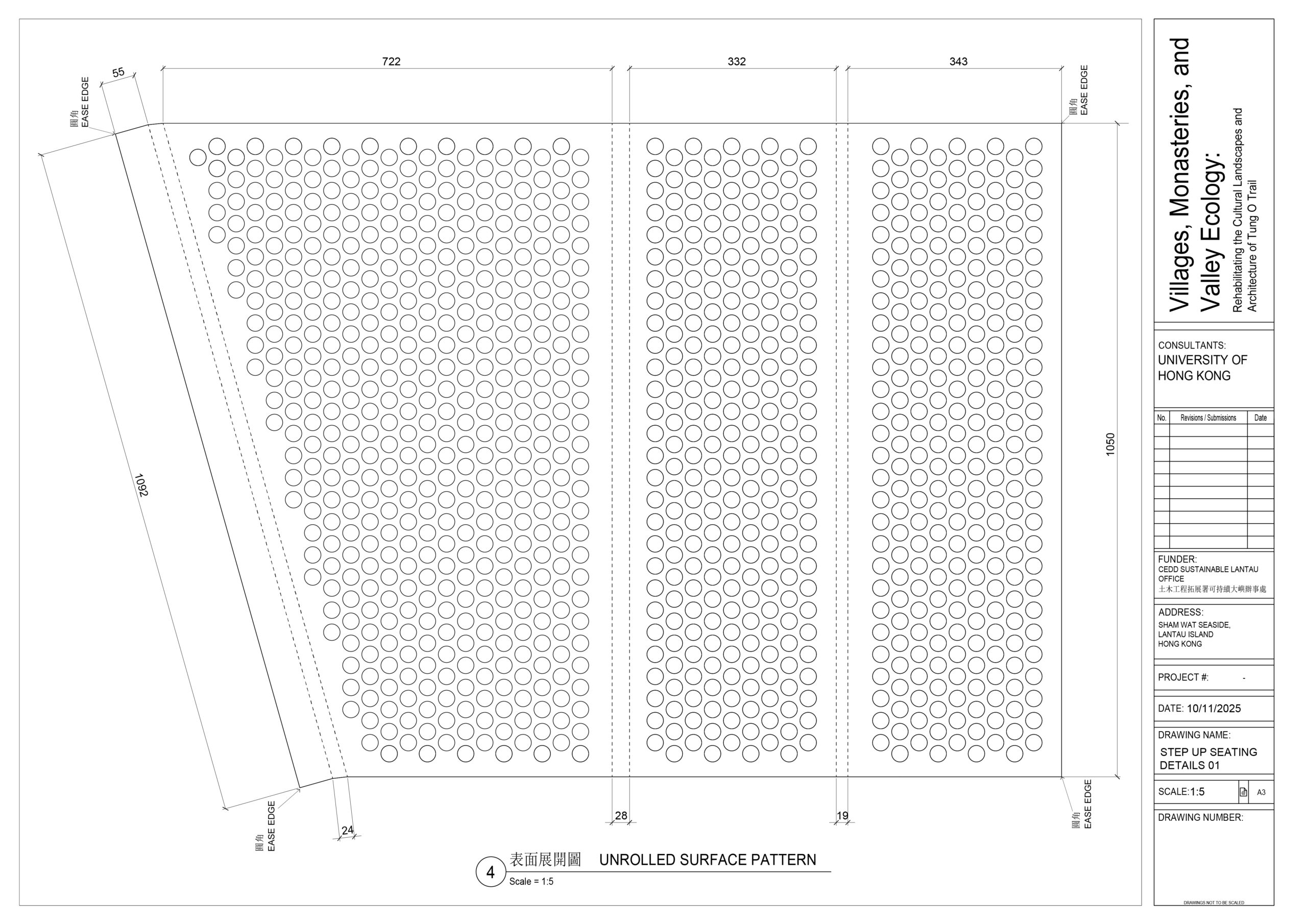
Over/Look: Perforated metal sculptures adapt concrete flood walls, incorporating stepped platforms and seating. They enable views over the wall to the bay, mangroves, wetlands, and mountains while symbolically linking the original village to the relocated settlement.
Curb/Cut: A double set of blue metal steps extending the road curb toward oyster beds. Designed as a functional adaptation inspired by villagers’ DIY modifications, it includes bamboo drying poles and wide treads for displaying harvested produce, matching local anti-weathering aesthetics.
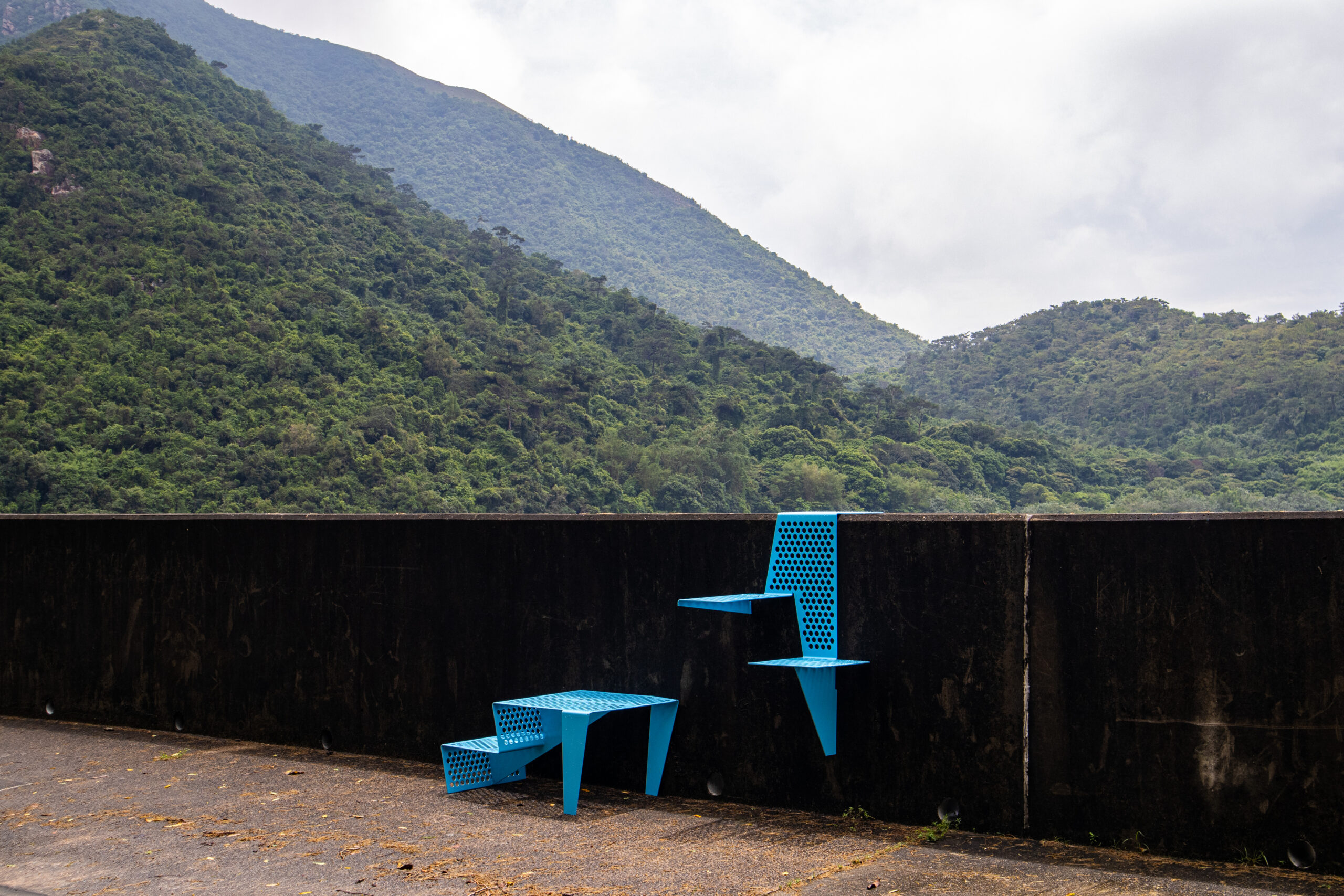 Over/Look
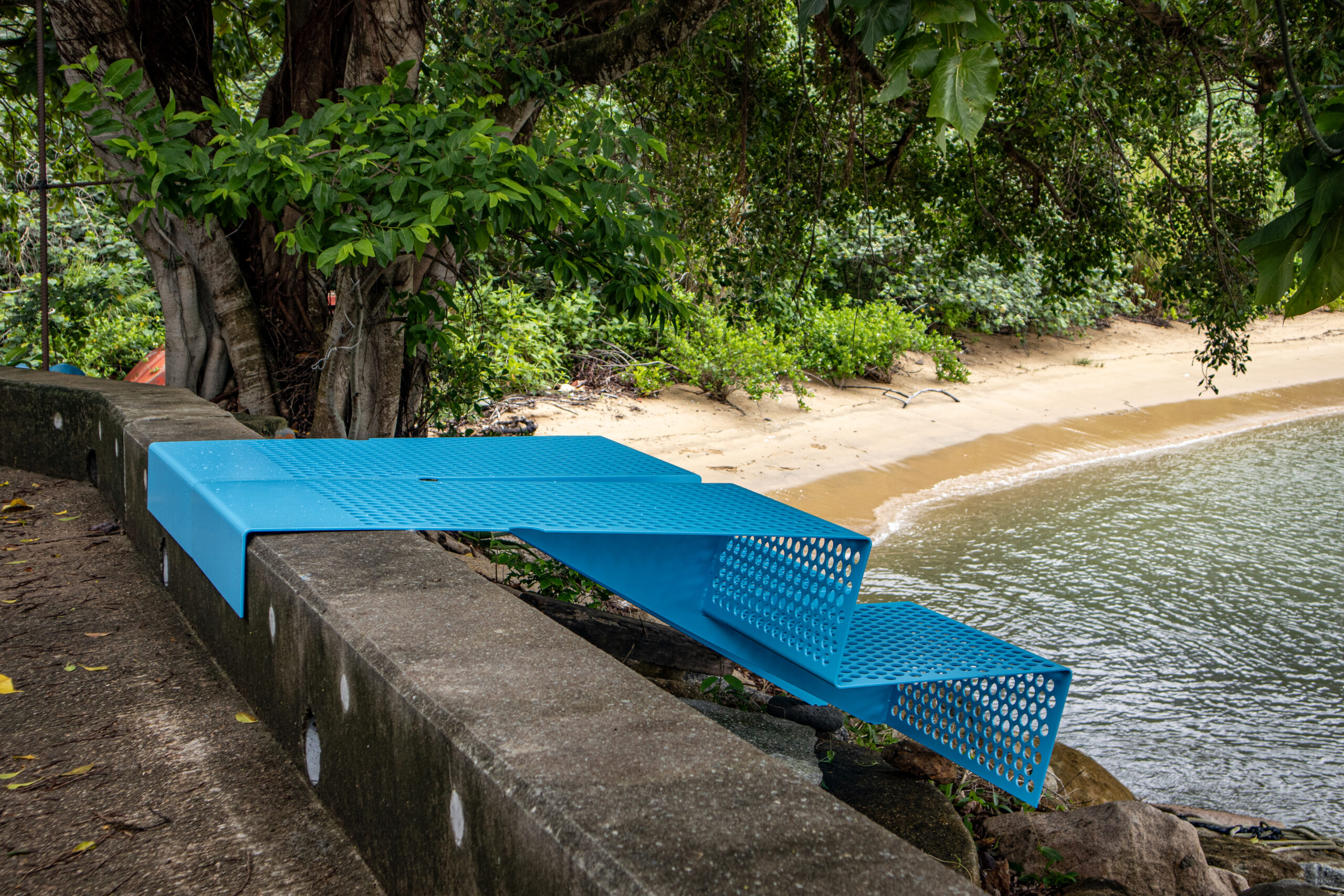 Curb/Cut
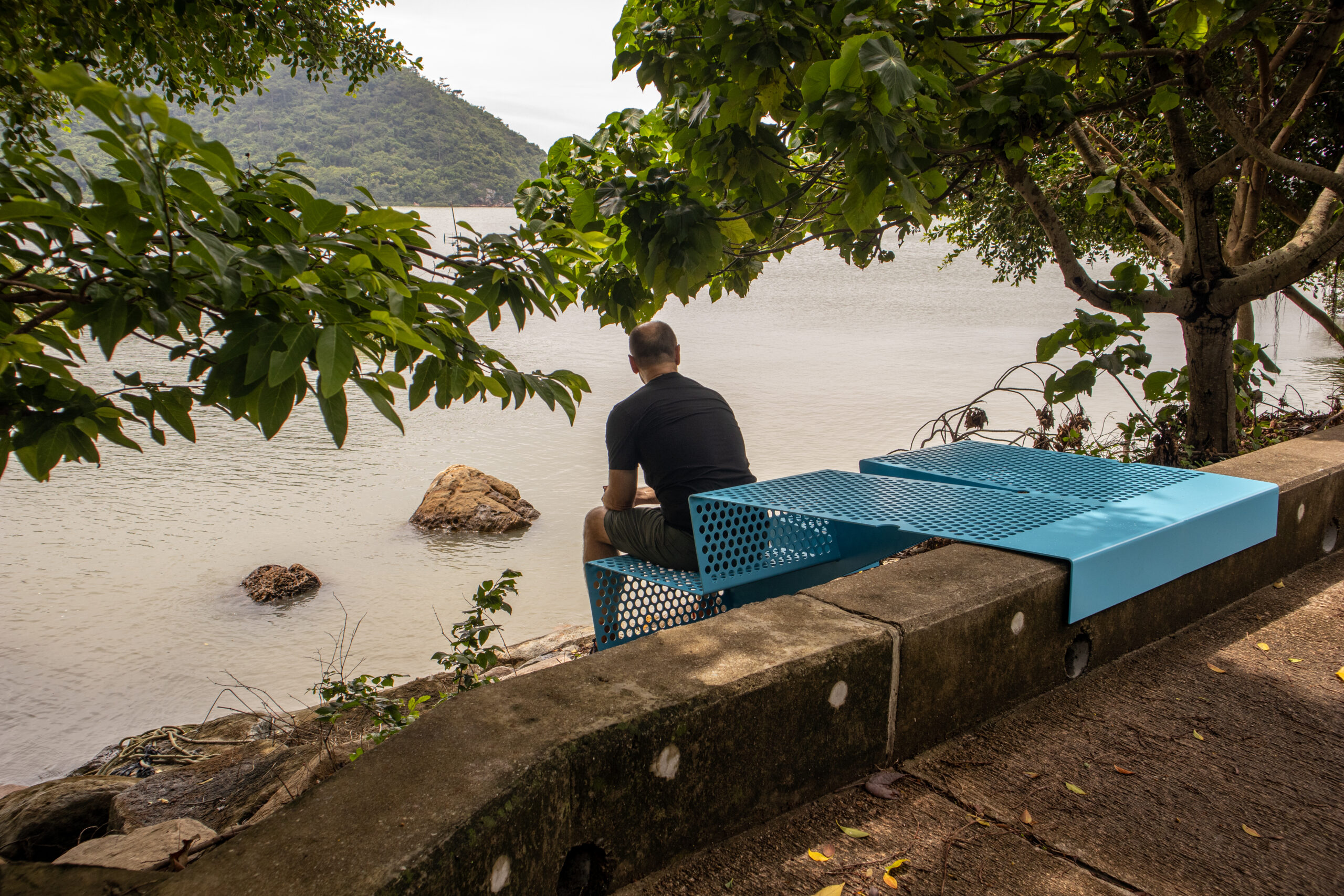 Curb/Cut
 Field/Traces